

 Knee Replacement
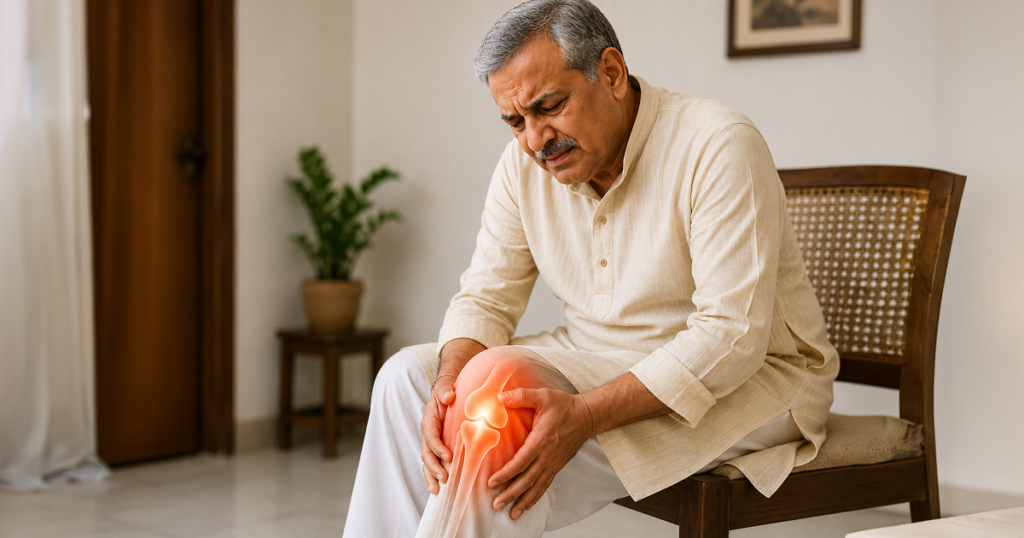
 Knee Pain
Many people treat knee pain as an inevitable part of aging. Many people believe that aching knees, stiffness while walking, or difficulty climbing stairs are simply signs that the body is getting old. This widespread belief has created the myth of the bad knee – the assumption that knee pain must be tolerated rather than treated. As a result, countless individuals continue to live with discomfort without exploring solutions that could significantly improve their mobility, quality of life, and understanding of treatment options, such as the knee replacement surgery cost.
The reality is that knee pain is not always a normal consequence of age. In many cases, it develops due to underlying conditions such as osteoarthritis, sports injuries, obesity, joint degeneration, or poor lifestyle habits. Modern orthopaedic treatments have enabled patients to regain mobility and reduce pain through physiotherapy, minimally invasive procedures, and advanced surgical options. Today, increased awareness about knee replacement surgery cost and advancements in orthopaedic care are encouraging more people to seek timely medical advice rather than delaying treatment out of fear or uncertainty.
Understanding the true cause of knee pain is the first step toward effective treatment. Ignoring symptoms or assuming you cannot treat the condition can worsen joint damage over time and limit your daily activities.
In this blog, we debunk the myth of the bad knee, explain why you should never ignore knee pain, and show how early diagnosis, proper care, and awareness of knee replacement surgery cost can help patients make informed decisions for a healthier, more active future.
Is Knee Pain Really a Part of Aging?
For generations, people have described creaky, aching knees as a natural consequence of living a long life. We chalk it up to “getting old” and start narrowing our worlds—taking the elevator instead of the stairs, skipping morning walks, or popping pain relievers like vitamins.
But here is the truth: While your joints do change over time, chronic, limiting knee pain is not a normal part of aging. It is a signal that something specific is wrong.
Understanding the difference between the inevitable wear and tear on your joints and an actual medical condition is the first step toward reclaiming your mobility.
The Difference Between Normal Wear-And-Tear And Chronic Conditions
It is completely normal for a 60-year-old knee to feel different than a 20-year-old knee. However, there is a distinct line between a joint that is simply “weathered” and one that is diseased or damaged.
Normal Wear-and-Tear (Aged Joints)
Think of normal wear and tear like the tread on a car tire. Over decades of walking, running, and jumping, the slick cartilage that cushions your knee thins slightly.
- How it feels: Mild stiffness first thing in the morning or after sitting for a long time, which usually disappears after a few minutes of moving around.
- The impact: It does not stop you from doing what you love; it just requires a bit more of a warm-up.
Chronic Conditions (Pathological Issues)
A chronic condition occurs when wear and tear crosses a threshold into structural damage, severe inflammation, or mechanical failure.
- How it feels: Deep, aching pain that persists even when you are resting or trying to sleep. It often includes swelling, a feeling of instability, or a sharp catch when you move.
- The impact: It actively alters your lifestyle, forcing you to give up daily activities and hobbies.
Common Culprits: Osteoarthritis, Meniscus Tears, And Inflammation
Knee pain is not always caused by aging alone. Several underlying conditions can damage the knee joint and affect mobility, comfort, and daily activities. Among the most common causes are osteoarthritis, meniscus tears, and inflammation. However, for each one, the knee replacement surgery cost differs for each one.
Osteoarthritis
Osteoarthritis occurs when the protective cartilage in the knee gradually wears away, causing bones to rub against each other, leading to pain, stiffness, swelling, and difficulty walking or climbing stairs. In advanced cases, patients may explore surgical options and learn more about factors that affect the knee replacement surgery cost.
Meniscus Tears
The meniscus acts as a cushion between the knee bones. A tear can happen due to sports injuries, sudden twisting movements, or age-related wear and tear. Common symptoms include knee pain, swelling, stiffness, and difficulty moving the joint properly.
Inflammation
Inflammation in the knee can develop from injuries, arthritis, overuse, or autoimmune conditions. It often causes swelling, warmth, tenderness, and discomfort during movement. If left untreated, chronic inflammation can gradually worsen joint damage and mobility issues.

Your Knee Pain Shouldn’t Be Ignored
The Slippery Slope: When Aching Turns into Damaging
It is incredibly easy to minimize knee pain. You tell yourself, It is just a little ache; I can push through it. You start taking the elevator, skipping your evening walks, or leaning heavily on the handrail when climbing stairs.
But your body does not exist in a vacuum. Your musculoskeletal system is a finely tuned kinetic chain, where every joint depends on the ones above and below it. When you ignore a persistent ache in your knee, your body automatically tries to protect you by shifting your weight and changing how you move.
What starts as a localized knee issue quickly becomes a slippery slope, triggering a domino effect that damages other parts of your body and steals your mobility.
The Kinetic Chain Domino Effect
A painful knee does not affect just one joint; it can disrupt your entire body alignment. When you unconsciously limp or shift weight away from the injured knee, other joints begin to compensate, creating a chain reaction of pain and strain.
The Hips
Favoring one knee forces the hips to work harder and bear uneven pressure. Over time, this can lead to hip pain, muscle strain, bursitis, or even osteoarthritis.
The Spine
An uneven walking pattern affects pelvic balance and places extra stress on the lower back, which may result in chronic back pain, muscle spasms, or sciatica.
The Opposite Leg
The “healthy” leg often carries more weight to compensate for the painful knee. As a result, the opposite knee and ankle experience increased wear and tear, raising the risk of future joint problems.
The Downward Spiral of Overall Mobility
The damage is not just structural; it is systemic. As pain spreads from your knee to your hip and back, your world naturally shrinks. As a result, it triggers a dangerous cycle of decline:
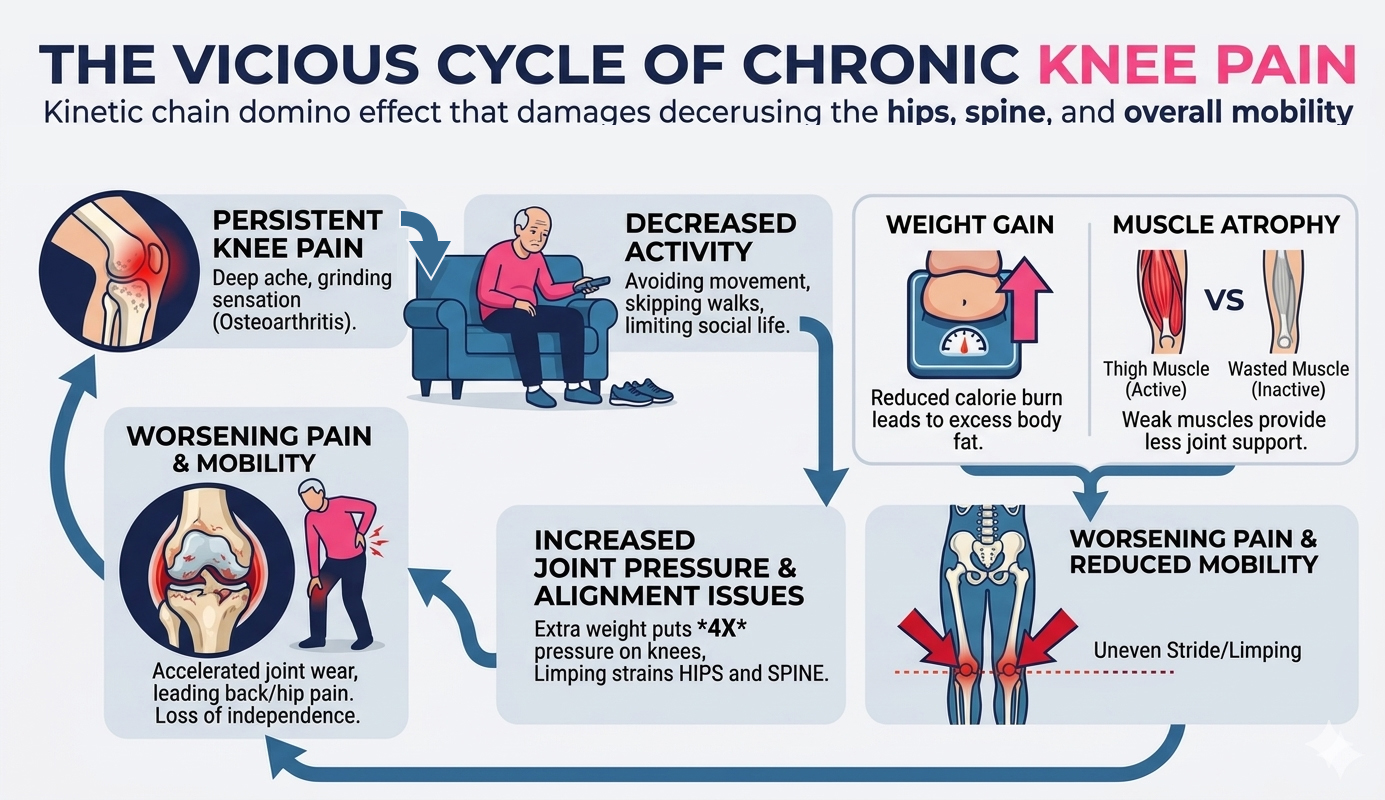
- Muscle Atrophy: When you move less, the quadriceps and hamstring muscles that support your knee weaken. Weak muscles mean the joint absorbs even more shock, accelerating the damage.
- Weight Gain: Reduced mobility makes it harder to stay active and burn calories. Gaining even a few extra kilos drastically increases the load on your joints.
- Loss of Independence: The ultimate toll of the slippery slope is not just the pain; it is what the pain takes away. It is the inability to play with grandkids, travel, shop for groceries comfortably, or get out of a chair without assistance.
Flags: Signs It Is Time to Stop Managing and Start Treating
You may manage occasional knee discomfort with rest and lifestyle changes. However, certain warning signs indicate that the problem may be progressing and requires proper medical attention rather than temporary relief.
The Rest Test
Pain that persists even at rest or keeps you awake at night is a major red flag. Persistent discomfort can indicate advanced joint damage, inflammation, or worsening arthritis, so you should not ignore it.
The Deformity Factor
Visible changes in knee alignment, such as bowed legs or an unstable walking pattern, often signal severe joint deterioration. Without treatment, these structural changes can worsen over time.
The Quality of Life Metric
If knee pain stops you from enjoying everyday activities like walking, climbing stairs, exercising, or spending time with family, it may be time to seek professional treatment. Reduced mobility and loss of independence are strong indicators that the condition is affecting your overall quality of life.

Let’s Talk About Your Knee Pain
When to See a Knee Replacement Surgeon
Many people delay seeing a knee specialist because they fear surgery. However, consulting a knee replacement surgeon does not automatically mean you will require surgery, even if concerns about knee replacement surgery cost often influence the decision. An early evaluation helps identify the exact cause of knee pain and allows doctors to recommend the most effective treatment before the condition worsens.
Why A Consultation Doesn’t Automatically Mean Surgery
A knee specialist first assesses the severity of the condition, reviews symptoms, and discusses different treatment options. In many cases, early diagnosis can help manage knee pain without surgery and prevent further joint damage.
Exploring Conservative Treatments First
Before recommending surgery, Dr Jay Patel, an orthopaedic surgeon, often suggests non-surgical treatments such as physiotherapy, medications, knee injections, exercise plans, and weight management strategies. These approaches can improve mobility, reduce pain, and delay or even avoid the need for surgery altogether.
What to Expect During a Surgeon Consultation
A consultation with a knee replacement surgeon evaluates your knee health, understands your symptoms, and determines the most suitable treatment plan. The goal is not just to discuss surgery, but to assess your overall joint condition and explore all available options for pain relief and improved mobility.
Imaging And Diagnostic Evaluation
The surgeon may recommend X-rays, MRI scans, or other imaging tests to examine joint damage, cartilage loss, inflammation, and bone alignment. These tests help identify the exact cause and severity of the knee problem.
Joint Mobility Tests
During the physical examination, the doctor will assess how well your knee moves, bends, and supports weight. They may also evaluate walking patterns, stiffness, swelling, and overall joint stability.
Risk-Benefit Analysis
Based on your age, lifestyle, medical history, and the severity of your symptoms, the surgeon will explain the potential benefits and risks of different treatment options. This helps you make informed decisions about non-surgical care, recovery expectations, and possible surgical treatment if required.
Conclusion
Knee pain is not always a normal part of aging and should not be ignored. Persistent pain, stiffness, or reduced mobility may indicate an underlying condition that requires proper treatment. Early diagnosis can help prevent further joint damage and improve overall quality of life.
Modern orthopaedic care offers many effective treatment options, from physiotherapy and lifestyle changes to advanced surgical procedures when necessary. Consulting Dr Jay Patel, an orthopaedic surgeon in Lunavada, early also helps patients understand their condition, treatment options, and factors such as knee replacement surgery cost.
Taking timely action can reduce pain, restore mobility, and help people maintain a more active and independent lifestyle.
FAQs
Is knee pain always a normal part of aging?
No, persistent knee pain is not always a normal part of aging. While mild stiffness can occur with age, ongoing pain, swelling, or difficulty walking may indicate conditions like osteoarthritis, inflammation, or joint damage that require medical attention.
When should I see a knee replacement surgeon?
You should consult a knee replacement surgeon if knee pain affects your daily activities, disturbs sleep, limits mobility, or does not improve with rest, medication, or physiotherapy. Early evaluation can help prevent further joint damage.
What is the cost of knee replacement surgery?
The cost of knee replacement surgery varies depending on factors such as the hospital, surgeon’s experience, type of implant, city, and the patient’s overall medical condition. Consulting Dr Jay Patel, an orthopaedic surgeon in Lunavada, Gujarat, for knee pain treatment can help you understand the estimated expenses, treatment options, and recovery costs involved.