


 Knee Replacement
 Knee Arthritis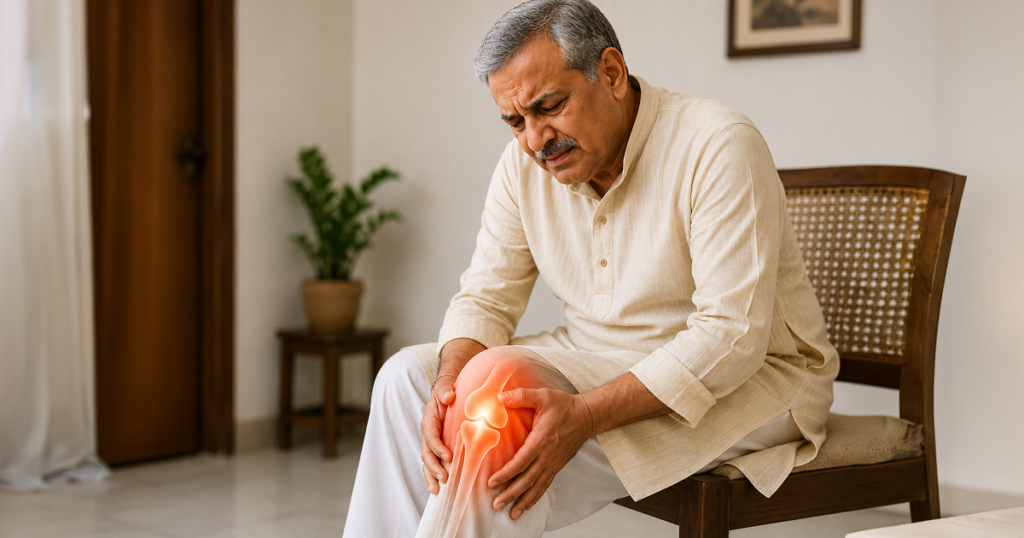
Conversations around knee replacement surgery often begin much later than the symptoms themselves. Not because people ignore pain, but because knee problems rarely arrive all at once. They usually appear in small moments like avoiding sitting on the floor, planning errands around shorter walks, or noticing that the knee feels different by the end of the day than it did a few months ago.
That is also why many people misunderstand knee replacement. It is not a decision based on one painful day or one scan report; it is usually part of a much larger conversation about pain patterns, movement, treatment response, and how much the knee has started affecting everyday life.
Understanding the early signs can help recognise changes early enough to explore all available treatment options and make informed decisions before symptoms begin limiting comfort, mobility, and independence.
What Does Knee Replacement Surgery Actually Mean?
One of the biggest misunderstandings around knee replacement surgery is that it means the entire knee is removed and replaced. In reality, knee replacement surgery is a procedure in which the damaged surfaces inside the knee joint are treated and replaced with specially designed components to support smoother movement and reduce discomfort. The approach recommended depends on how much of the joint is affected.
Not all knee replacements are the same. Understanding the difference helps patients ask better questions and make informed decisions.
| Type | What It Usually Means | When It May Be Considered |
| Partial Knee Replacement | Only the affected portion of the knee joint is treated while preserving healthy areas | When damage is limited to one section of the knee |
| Total Knee Replacement | Multiple affected parts of the knee joint are addressed | When symptoms and joint changes affect larger portions of the knee. |
The goal of both approaches remains to improve comfort, support movement, and help patients return to daily activities more comfortably.
Knee replacement is generally considered after understanding symptoms and not based on age alone.
Patients who discuss this option are often people who may experience:
- Persistent knee pain that affects everyday activities
- Stiffness that limits movement
- Knee arthritis that continues progressing despite treatment
- Difficulty walking, climbing stairs, or standing comfortably
- Symptoms that continue despite medications, physiotherapy, or lifestyle changes
But how do you know when symptoms are moving beyond everyday knee discomfort?
Let’s look at the early signs that may indicate your knee needs more attention than rest or temporary relief.
Early Signs You May Need Knee Replacement Surgery
Knee problems often show up as repeated interruptions. These symptoms do not usually appear overnight, but when multiple symptoms begin appearing together or continue despite treatment, they may indicate that your knee needs more attention than temporary relief.
The list below includes common signs worth paying attention to.
Knee Pain That Keeps Returning
Occasional knee discomfort can happen after physical activity or strain. But pain that keeps returning, especially during walking, standing, or after rest, may suggest ongoing changes inside the joint. Research shows persistent knee pain is commonly associated with progressive joint changes and reduced quality of movement over time.
Pain While Climbing Stairs
Many people notice this sign earlier than expected. If climbing up or down stairs becomes uncomfortable, slower, or something you actively avoid, the knee may not be absorbing movement efficiently. Stair-related pain is commonly reported in people experiencing early functional limitations in the knee.
Morning Stiffness That Lasts
Temporary stiffness after waking up is common. However, if your knee regularly feels tight, difficult to bend, or takes noticeable time before movement feels comfortable, it may indicate that the joint is not recovering normally between periods of rest.
Swelling That Does Not Improve
Swelling is the body’s way of responding to stress or irritation. If swelling keeps returning, remains visible, or appears even after reducing activity, it may suggest ongoing inflammation or joint-related changes rather than temporary overuse.
Reduced Knee Movement
If bending the knee fully, sitting cross-legged, getting into a vehicle, or standing up becomes difficult, it may indicate that the knee’s movement capacity is changing. Reduced range of motion is one of the common reasons patients eventually seek orthopedic evaluation.
Walking Short Distances Feels Difficult
A useful question to ask yourself is: Has my walking distance changed? If everyday movement starts feeling heavier, slower, or requires more breaks than before, the issue may no longer be discomfort alone—it may be affecting knee function.
Daily Activities Start Changing
One of the strongest indicators is not pain itself—it is behaviour change. Sitting differently, avoiding markets, limiting household work, planning movement, or choosing convenience over comfort may be early signs that symptoms are influencing daily life.
Pain Begins Affecting Sleep
Pain that starts interfering with sleep deserves attention. If you find yourself changing positions frequently, waking because of discomfort, or feeling better only after changing posture, the symptoms may be becoming more persistent than occasional strain.
Noticing these signs does not mean you need surgery; it means your knee may benefit from understanding, evaluation, and exploring the right treatment options earlier.

Still Wondering Whether Your Knee Needs Attention?
Common Knee Pain Causes Before Considering Surgery
Understanding why the knee is hurting becomes more important than deciding how to treat it. Knee replacement surgery is generally considered one of several treatment options and usually only after understanding symptoms, movement limitations, and how the knee responds to earlier treatment approaches.
# Cause 01: Knee Arthritis
One of the most common causes of long-term knee discomfort is knee arthritis. Simply put, it happens when the smooth cushioning inside the knee gradually changes over time, making movement feel less comfortable and increasing stiffness or pain.
People often describe knee arthritis as:
- Pain during movement but relief after resting
- Stiffness after sitting for longer periods
- Difficulty with stairs or bending the knee
- A feeling that the knee has become “less reliable” over time
If symptoms continue progressing, consulting a specialist such as a knee arthritis doctor, Lunawada, may help patients understand treatment options before symptoms begin affecting daily life further.
# Cause 02: Age-Related Joint Changes
Joint changes can happen gradually over time, not because movement is harmful, but because joints experience years of daily use.
Age-related knee changes may include:
- Reduced shock absorption inside the joint
- Increased stiffness after periods of rest
- Slower recovery after physical activity
- Reduced flexibility during movement
Age alone does not decide treatment, but understanding how symptoms affect everyday life often becomes more important than the number on a medical record.
# Cause 03: Weight and Joint Pressure
Body weight influences how much force the knee experiences during everyday activities.
| Movement | Approximate Pressure Experienced by the Knee |
| Walking | ~2–3× body weight |
| Climbing stairs | ~3–4× body weight |
| Squatting | Higher than normal walking load |
This does not mean weight alone causes knee problems, but it can influence how symptoms feel during daily movement.
# Cause 04: Previous Injury
Sometimes the knee remembers injuries long after people stop thinking about them.
Past concerns such as:
- Sports injuries
- Falls
- Ligament injuries
- Previous fractures
- Untreated knee pain
May affect how force moves through the joint over time and may contribute to later discomfort.
# Cause 05: Lifestyle and Movement Patterns
Modern routines can influence knee health more than many people realise.
Patterns that may gradually affect comfort include:
- Long sitting hours
- Reduced physical activity
- Repetitive stair use
- Frequent squatting or kneeling
- Limited muscle strengthening
- Irregular movement habits
Often, the goal is to support better movement.
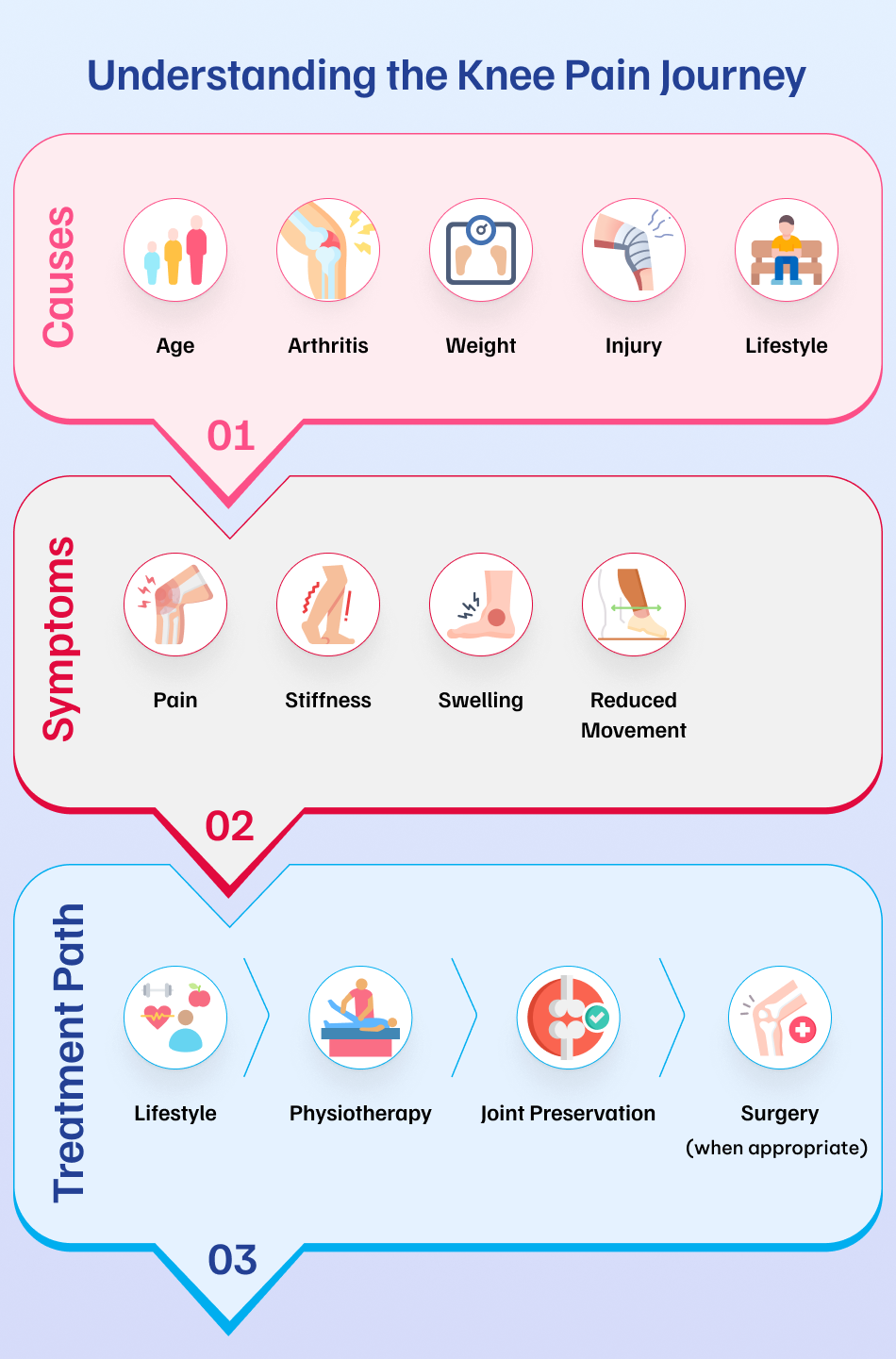
Knee pain usually becomes easier to understand when you look at it as a chain: the cause influences symptoms, and symptoms influence treatment decisions.
The visual below explains how this journey often progresses, from what starts the discomfort to the different ways it may be managed.
When Conservative Treatments May Not Be Enough
For many patients with knee problems, the first goal is to understand the cause, reduce symptoms, and improve movement before considering surgery. Treatment usually starts with simpler approaches and progresses only if symptoms continue affecting daily life.
- Activity Modification: Small changes in daily movement may reduce pressure on the knee. This can include reducing repetitive strain, adjusting stair use, choosing lower-impact activities, and improving movement habits.
- Physiotherapy: Physiotherapy helps improve knee strength, flexibility, and movement. For many patients, it supports daily function and may delay the need for advanced treatment.
- Medication Support: Short-term medication support may help manage discomfort and improve movement. However, treatment decisions are based on the cause of symptoms—not pain relief alone.
- Joint Preservation Approaches: When surgery is not immediately required, treatment may focus on maintaining existing knee function through rehabilitation, monitoring, and personalised care.
Surgery usually becomes part of the conversation when symptoms continue affecting daily life despite trying earlier treatment approaches. Treatment discussions may include options such as knee replacement procedures and newer approaches like robotic-assisted knee replacement where appropriate.
What Happens Before Knee Replacement Surgery Is Recommended?
Knee replacement surgery is usually considered only after understanding symptoms, evaluating movement, and discussing available treatment options. The process is designed to help patients make informed decisions.
Step 1: Medical Evaluation
The first step is understanding your symptoms before discussing treatment. During this conversation, your doctor may ask when the pain started, what activities make it worse, whether treatments have already been tried, and how the knee is affecting everyday life. This step helps identify whether symptoms may benefit from lifestyle changes, rehabilitation, or further evaluation.
Step 2: Imaging and Knee Assessment
If required, the next step may involve imaging and knee assessment to better understand what is happening inside the joint. Depending on symptoms, this may include X-ray or other evaluation methods to understand movement, alignment, and joint changes.
Step 3: Daily Activity Assessment
Your doctor may discuss how comfortably you walk, climb stairs, sit, work, travel, or complete routine activities. Understanding these daily limitations often becomes as important as understanding the scan itself.
H3: Treatment Planning
Once evaluation is complete, treatment options are discussed based on symptoms, lifestyle, movement goals, and overall knee condition. The purpose of treatment planning is to understand what may help improve mobility, support everyday activities, and maintain long-term knee function.
Whether the approach includes rehabilitation, joint preservation, or knee replacement surgery, the decision is usually based on what best suits the patient at that stage. Consulting a knee replacement surgeon in Gujarat can help patients understand available options and make informed decisions based on their individual needs.
Understanding Cost: Is Knee Replacement Always Expensive?
The cost of knee replacement surgery can vary significantly, and treatment suitability often matters more than price alone. Recent estimates show that knee replacement procedures in India can vary widely depending on factors like evaluation needs, hospital facilities, implant selection, technology used, recovery planning, and whether the treatment involves advanced approaches rather than one fixed package price.
It is also helpful to remember that surgery cost is only one part of the journey. Planning may include consultation, imaging, rehabilitation, hospital stay, and recovery support.
Read our detailed blog on knee replacement cost, where we have covered cost factors, what may be included, and common patient questions.
How to Choose the Right Knee Replacement Surgeon
Choosing the right treatment starts with understanding whether surgery is needed, understanding whether surgery is the right option, and what outcomes to realistically expect. These are some of the most common questions patients ask before making a decision and the answers that you can match.
- What Signs Indicate a Knee Replacement?
Persistent pain, stiffness, swelling, reduced movement, and difficulty with daily activities despite treatment are some common signs that may lead to further evaluation.
- Can an X-Ray Show If You Need a Knee Replacement?
An X-ray helps assess joint condition and knee changes, but treatment decisions are usually made by combining imaging, symptoms, and everyday movement limitations.
- Is Surgery Always Necessary?
No. Many patients begin with rehabilitation, medication support, activity changes, or joint preservation approaches before surgery is discussed.
- Is There a Risk in Delaying Knee Replacement Surgery?
Not every delay is harmful, but waiting too long after symptoms begin affecting movement may reduce comfort and limit treatment flexibility.
- What Recovery Should I Expect After Knee Replacement?
Recovery varies from person to person, but treatment goals usually focus on improving mobility, supporting daily activities, and gradually rebuilding confidence in movement.
- How Long Does a Knee Replacement Usually Last?
Long-term outcomes vary, but modern knee replacement procedures are designed to support movement and function for many years depending on lifestyle, rehabilitation, and individual factors.
At Bapashri Multi-Specialty Orthopedic Hospital, Lunawada, Dr. Jay Patel (M.S. Orthopaedics – Gold Medalist) focuses on helping patients understand all available treatment options before deciding the next step, including conservative care, rehabilitation, and advanced treatment pathways where appropriate.
Conclusion
Knee problems often begin gradually, which makes them easy to ignore until everyday movement starts feeling different. Understanding the early signs and exploring treatment options at the right time can help patients make informed decisions before symptoms begin affecting comfort and mobility.
Knee replacement surgery is not always the first answer, but knowing when to seek guidance may help protect movement, confidence, and quality of life.
FAQs
Can knee replacement be avoided?
In some cases, yes. Depending on the cause and stage of symptoms, treatment may begin with physiotherapy, activity modification, medication support, weight management, or joint preservation approaches. However, if pain and movement limitations continue affecting everyday life, knee replacement may become one of the treatment options discussed.
What age is knee replacement common?
Knee replacement is more commonly considered in adults between 50 and 80 years of age, particularly when long-term knee pain, stiffness, and reduced movement begin affecting daily activities. However, age alone does not decide treatment. The decision is usually based on symptoms, knee condition, activity level, overall health, and how much everyday life is being impacted.
Does robotic surgery improve accuracy?
Robotic-assisted knee replacement is designed to support surgical planning and precision during selected procedures. It may help surgeons plan alignment and treatment more accurately in appropriate cases, but it is not automatically required for every patient.
How do I know if knee pain is arthritis?
Knee arthritis may feel like persistent pain, stiffness after sitting or waking up, swelling, reduced flexibility, or discomfort during walking and climbing stairs. Symptoms can feel gradual at first, which is why evaluation is often helpful to understand the exact cause rather than assuming it is normal ageing.