


 Before and After Knee Replacement Surgery
 Knee Replacement Recovery
When people hear the words knee replacement surgery, they often imagine weeks of complete bed rest and immobility. It is a common misconception, but the reality is quite different. Modern knee replacement recovery is built around early movement, guided physical therapy, and a gradual return to everyday activities.
In fact, prolonged bed rest after surgery can slow healing, increase stiffness, and raise the risk of complications. While rest is certainly an important part of recovery, so is safe, controlled activity. Understanding what to expect during knee replacement recovery can help you prepare mentally, set realistic goals, and approach rehabilitation with confidence.
In this blog, we will explain how much rest you actually need after surgery, when you can start walking, what recovery milestones to expect, and how to balance activity with healing for the best possible outcome.
Why Bed Rest is Out, and Early Mobility is In
If you are picturing yourself confined to a hospital bed for weeks after knee replacement surgery, surrounded by fluffy pillows and a strictly hands-off approach to movement, you can let out a huge sigh of relief.
That version of recovery belongs to a bygone era of medicine.
The short answer to whether knee replacement requires complete bed rest is a definitive no. In fact, modern Orthopedic medicine treats prolonged bed rest as a direct risk to a successful recovery. Today, the global clinical gold standard is a protocol known as Early Mobility, and the evidence supporting it is staggering.
Why Your Surgeon Wants You Up On Day 0
Do not be surprised if a physical therapist walks into your hospital room just 4 to 24 hours after surgery to help you sit up and take your very first steps. In the medical world, this is called Day 0 mobility.
Under modern knee replacement recovery protocols, many patients can safely stand and take their first few steps on the same day as their surgery.
Your new titanium-and-plastic joint is mechanically stable the moment the surgeon fixes it into place. By using advanced, long-lasting localized nerve blocks rather than heavy, sedating general anesthesia, hospitals can manage your pain effectively enough to get you moving safely. At the same time, the surgical cuts are still fresh.
The Hidden Dangers of Staying in Bed
Forcing yourself into bed rest after surgery is not just bad for your physical therapy progress; data show it actively compromises your cardiovascular system. When you lie perfectly still, blood flow slows down, drastically increasing your risk for dangerous post-operative complications.
Medical data highlights exactly why early movement is mandatory:
- Blood Clot Prevention: The American Academy of Orthopedic Surgeons (AAOS) recommends early movement after surgery, along with preventive measures such as blood-thinning medications and compression devices, to help reduce the risk of Deep Vein Thrombosis (DVT), a potentially serious blood clot that can form in the legs. Prolonged bed rest can slow blood flow and increase the likelihood of clot formation.
- Preventing a Frozen Joint: Within just 48 hours of total inactivity, the body begins laying down dense, disorganized scar tissue around the knee capsule. If you stay in bed, this tissue locks the joint into a bent position, making it incredibly painful and difficult to achieve the standard 90° to 110° of flexion (bending) required for normal daily activities later on.
The Benefits of Early Movement
Getting up immediately is about basic biology. Moving your legs acts like a mechanical pump, forcing fluid out of the joint space and back into your circulatory system.
Getting up and moving soon after surgery helps improve circulation, reduce swelling, and support the healing process. Less swelling often means less discomfort and greater ease when performing rehabilitation exercises.
Ultimately, early movement significantly reduces your hospital stay. A decade ago, patients routinely spent 5 to 7 days in a hospital bed. Today, the average hospital stay for a total knee replacement has dropped to just 1 to 2 days, with many healthy patients even heading home the same afternoon.
Rest is still a vital ingredient in your healing journey, but it will be highly strategic, spaced between short, frequent walking bouts.
Wondering if knee replacement is the right choice for you?
The First 24–48 Hours: Hospital to Home
Historically, undergoing a total knee replacement meant settling into a hospital room for a five-to-seven-day stay. Today, thanks to Enhanced Recovery After Surgery (ERAS) protocols, that timeline has collapsed. The modern hospital stay for a standard knee replacement is now just 1 to 2 days, with an increasing number of eligible, healthy patients safely qualifying for same-day discharge.
This rapid transition from the operating room to your own couch is a carefully calculated, metric-driven process designed around hitting crucial functional benchmarks.
Moving in the Hospital
The first 24 hours are a whirlwind of activity. Once the anesthesia completely wears off in the Post-Anesthesia Care Unit (PACU), your care team’s primary goal is to shift you from a passive patient to an active mover.
- In-Bed Circulation (Hours 1–6): Even when lying down, bed rest is strictly limited. You will be instructed to perform hourly ankle pumps and leg squeezes. Hospital data confirm that pairing these simple movements with mechanical compression boots reduces the structural threat of localized blood pooling by keeping your baseline circulation active.
- The First Stand (Hours 6–24): Within the first day, a physical therapist (PT) will assist you in swinging your legs over the edge of the bed and standing up. According to a clinical audit published in PMC Medical Journals, over 90% of patients achieve this early mobilization benchmark within the 24-hour window, resulting in significantly shorter overall hospital stays.
Your Discharge Milestones
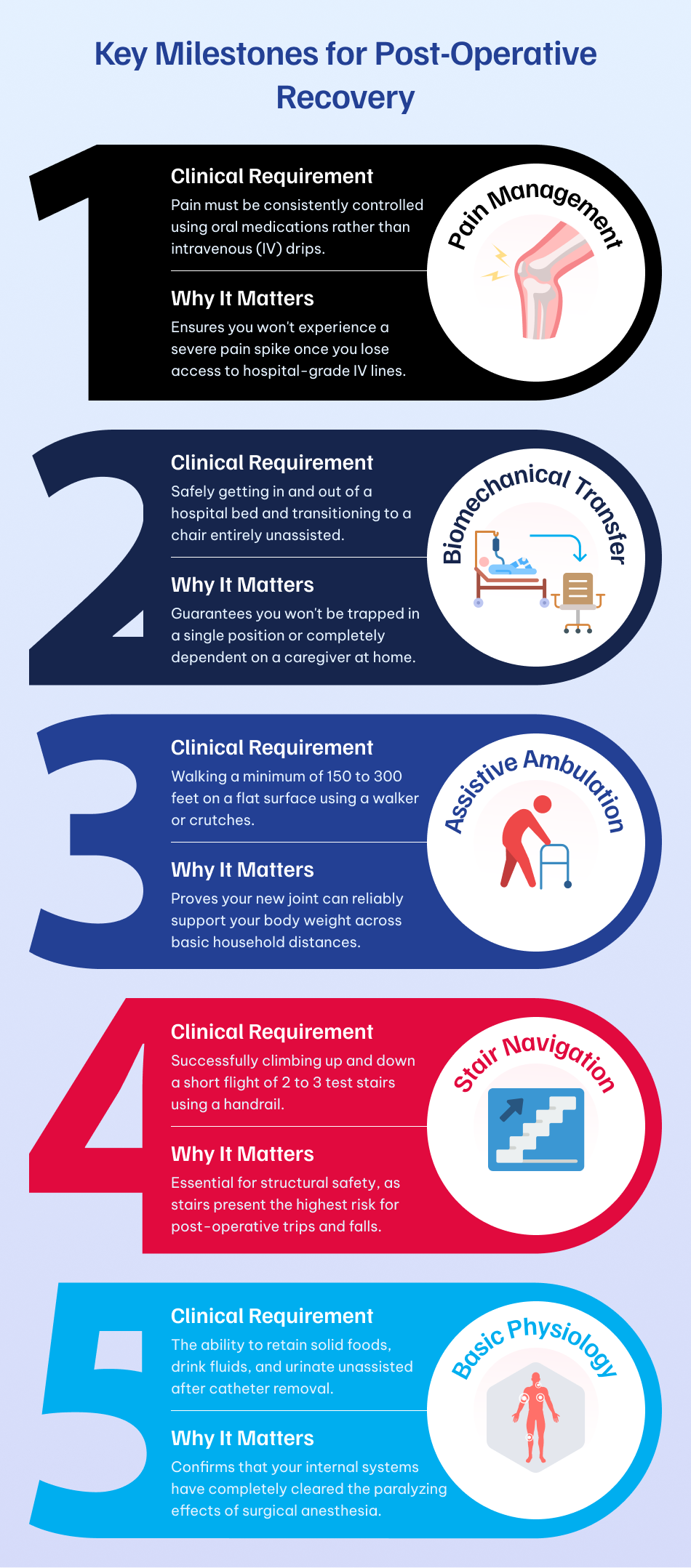
Hospitals do not release joint replacement patients based on a clock or a calendar; they release them based on functional autonomy. Before a surgeon can sign your discharge paperwork, you must prove to the clinical team that you can safely handle basic daily living requirements.
According to guidelines outlined by the AAOS, you must independently clear these five specific milestones before going home:
The First Ride Home: Active Recovery Begins
Once you meet these benchmarks, you will be discharged with a customized home exercise prescription. Our physical therapist will strongly emphasize that going home does not mean returning to bed.
The 48-Hour Standard: Clinical rehabilitation protocols mandate that you alternate between sitting or resting and short 5- to 10-minute household walks every few hours. Keeping the joint moving prevents the fresh surgical fluid from pooling into dense swelling, ensuring your knee does not lock up during the critical first week at home.
Timeline of a Typical Knee Replacement Recovery
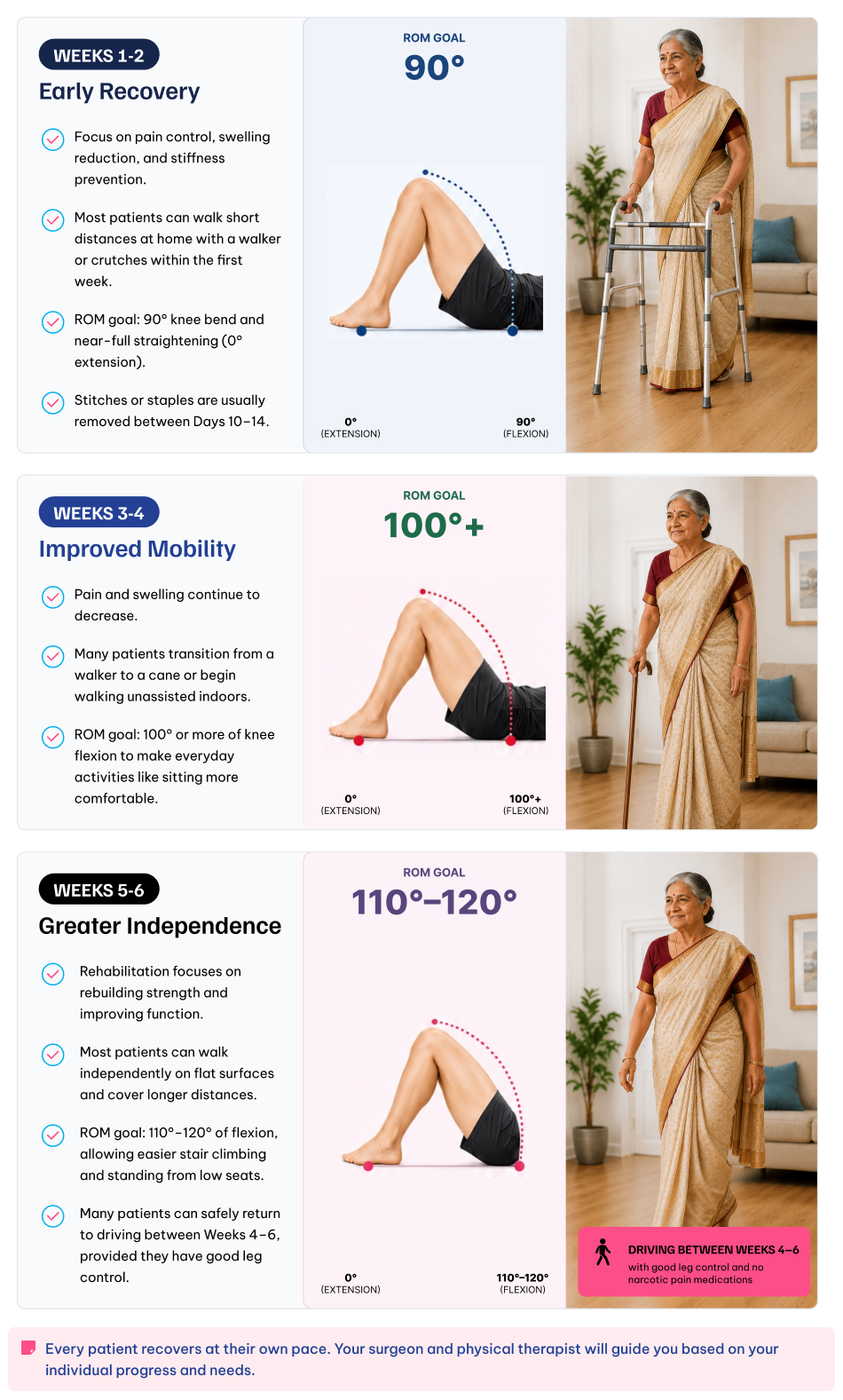
Recovery is measured by movement milestones rather than rest. While healing varies from person to person, most patients follow a predictable timeline guided by Range of Motion (ROM) goals. ROM is measured in degrees: zero degrees represents a completely straight leg (extension), while a higher number represents how far you can bend your knee (flexion)
The Art of Active Recovery
Many patients assume knee replacement recovery means spending most of the day in bed. In reality, successful recovery depends on active rest—a balance between movement and recovery activities that promote healing without overloading the new joint.
Finding the Right Balance Between Movement and Elevation
During the first few weeks, alternate periods of gentle activity with periods of rest. Short walks around the home, prescribed knee rehabilitation, and routine daily movements help improve circulation, prevent stiffness, and reduce the risk of complications such as blood clots.
At the same time, your knee needs regular breaks. Elevating the leg above heart level helps reduce swelling and discomfort. A good rule of thumb is to move frequently throughout the day while avoiding long periods of standing, sitting, or lying in one position.
The ICE Protocol: Ice, Compression, and Elevation
The ICE protocol remains one of the most effective ways to manage post-surgical swelling and pain:
- Ice: Apply a cold pack for 15–20 minutes at a time, several times a day, especially after exercise or walking.
- Compression: Wear compression stockings or wraps if recommended by Dr. Jay Patel to help control swelling and improve circulation.
- Elevation: Elevate the leg so that the ankle is positioned above heart level whenever possible.
Using these three strategies together can significantly reduce inflammation and make rehabilitation exercises more comfortable.
How to Sleep Comfortably and Safely
Sleep can be difficult during the first few weeks due to swelling and discomfort. Most surgeons recommend sleeping on your back with pillows under your calves and ankles, not under your knees, to help keep your legs straight.
Once your knee replacement surgeon approves, you may sleep on your side with a pillow between your legs for support. Maintaining a comfortable position and following your pain-management plan can improve sleep and aid recovery.

Don’t let knee pain
hold you back.
Essential Tips for a Smooth, Active Recovery
Remember that a knee replacement recovery is the result of many small, consistent efforts. Staying active within your doctor’s guidelines, managing knee rehabilitation, swelling, and maintaining a positive mindset can all contribute to better outcomes.
Prepare Your Home Before Surgery
A safe home environment can make recovery easier and reduce the risk of falls. Before surgery, remove loose rugs, electrical cords, and clutter that could create trip hazards. Arrange frequently used items within easy reach and consider installing grab bars in the bathroom, along with a raised toilet seat or shower chair if recommended. Creating clear walking paths throughout your home will help you move around safely during the first few weeks.
Set Realistic Expectations
Recovery after knee replacement is a gradual process. Some days will feel easier than others, and temporary increases in pain, swelling, or stiffness are normal as your activity level changes. Focus on steady progress rather than daily perfection. Consistently following your rehabilitation plan is far more important than comparing your recovery to someone else’s timeline.
Know the Warning Signs
While complications are uncommon, it is important to recognize symptoms that require medical attention. Contact your knee replacement surgeon immediately if you experience:
- Increasing redness, warmth, swelling, or drainage around the incision
- Fever or chills that may indicate an infection
- Severe calf pain, tenderness, or swelling in one leg
- Sudden shortness of breath or chest pain, which may signal a blood clot emergency
If you notice any of these warning signs, contact Bapashri Hospital right away. Prompt medical attention can help prevent serious complications and support a smoother recovery.
Conclusion
Knee replacement surgery does not mean weeks of complete bed rest. In fact, successful knee replacement recovery depends on finding the right balance between rest and movement. While it is important to give your body time to heal, early walking, physical therapy, and gradual increases in activity are crucial to restoring strength, flexibility, and function.
Knee replacement recovery can be challenging at times, especially during the first few weeks, but steady progress is the goal, not perfection. By following your recovery plan, managing pain and swelling, preparing your home for safety, and knowing when to seek medical advice at Bapashri, you can set yourself up for a smoother recovery journey. If you are considering surgery or have questions about recovery, speaking with an experienced robotic knee replacement surgeon in Gujarat can help you make informed decisions and plan your treatment journey with confidence.
FAQs
Can I climb stairs right away?
Yes, most patients begin climbing stairs shortly after surgery, often with the guidance of a physical therapist before leaving the hospital. Initially, you will use a handrail and may need to take one step at a time. As strength and mobility improve, climbing stairs becomes easier and more natural.
How long until I can walk without a walker or cane?
Most patients use a walker for the first 1–3 weeks after surgery before transitioning to a cane. Many can walk unassisted indoors by Weeks 3–6, although the exact timeline depends on factors such as age, fitness level, and adherence to knee rehabilitation.
Will I regret getting the surgery done during the first week of recovery?
Many patients experience moments of doubt during the first week due to pain, swelling, fatigue, and limited mobility; this is a normal part of the knee replacement recovery process. While the early days can be challenging, most patients report significant improvements in pain relief, mobility, and quality of life as healing progresses over the following weeks and months.
Why should I choose a robotic knee replacement surgeon in Gujarat?
A robotic knee replacement surgeon in Gujarat uses advanced robotic-assisted technology to help improve surgical precision, implant positioning, and overall treatment planning, which may contribute to a smoother recovery and better long-term outcomes.
How much walking should I do after knee replacement surgery?
Most patients are encouraged to take short, frequent walks starting soon after surgery. During the first few weeks, walking around your home several times a day can help improve circulation, reduce stiffness, and support recovery. As your strength and mobility improve, Dr. Jay Patel or physical therapist will guide you on gradually increasing your walking distance and activity level. Avoid overexertion, and always follow your prescribed knee rehabilitation plan.