


 Joint Pain
 Orthopedic Care
Most people do not decide to visit an orthopedic doctor because of one bad day. It usually happens after weeks of small adjustments that go unnoticed even when movement no longer feels natural.
Joint pain is often misunderstood as a normal part of aging or physical work. But pain that keeps returning, stiffness that makes movement difficult, swelling, reduced flexibility, or discomfort that slowly begins to affect everyday activities may be signs that your joints need attention.
Ignoring these changes does not always make them disappear. In some cases, delaying evaluation can lead to longer recovery periods, more limited treatment options, and unnecessary discomfort. Knowing when to seek the right care can help you address problems earlier and maintain long-term joint health and mobility.
Is Joint Pain Normal or a Sign You Need Medical Attention?
Not every joint pain means something serious, but not every pain should be ignored either. Temporary joint discomfort is often linked to overuse, physical activity, or minor strain and improves within a few days with rest. Persistent pain tends to stay longer, return repeatedly, or gradually become more noticeable over time.
Similarly, acute joint pain appears suddenly and is commonly linked to injury or short-term inflammation, while chronic joint pain develops slowly or lasts for weeks to months and may require medical evaluation.
Common Causes of Joint Pain
- Age-related wear and tear: As we age, the cushioning cartilage in our joints gradually changes, making stiffness and discomfort more common, especially in the knees, hips, and hands.
- Arthritis: Arthritis is one of the leading causes of persistent joint pain and stiffness and is commonly seen in adults above 45 years, with women often experiencing increased risk after midlife due to joint and hormonal changes.
- Injury: Even after recovery, previous fractures, ligament injuries, falls, or untreated trauma may continue affecting how a joint moves and bears weight.
- Sports strain or repetitive movement: Repeated bending, lifting, squatting, physical labour, or high-impact activity can gradually place stress on joints and surrounding tissues.
- Obesity: Extra body weight increases more than body mass. Research suggests that for every 1 pound (0.45 kg) of weight lost, knee pressure may reduce by nearly 4 pounds during movement, making weight an important factor in knee and hip discomfort.
- Underlying inflammation or medical conditions: In some cases, ongoing inflammation or other medical conditions may affect joint comfort and mobility beyond normal wear and tear.
The location of joint pain often provides important clues about its possible cause and whether medical attention is warranted.
| Joint | Common Symptoms | When to Seek Help |
| Knee | Pain while walking, climbing stairs, stiffness, swelling | Symptoms last more than 2–3 weeks or affect daily movement |
| Hip | Difficulty standing, pain while sitting or walking | Reduced mobility or recurring discomfort |
| Shoulder | Stiffness, difficulty lifting the arm | Limited movement or pain during routine activities |
| Ankle | Swelling, instability, discomfort while walking | Repeated sprains or persistent pain |
| Wrist | Weak grip, pain during daily tasks | Symptoms interfere with work or routine use |
| Elbow | Pain during lifting or bending | Pain continues despite rest |
| Lower Back (associated joints) | Stiffness and movement discomfort | Symptoms begin affecting posture or mobility |
As the table shows, joint pain does not always look the same across different parts of the body, but when symptoms start lasting longer, they should not be overlooked.
Whether you are considering visiting an Orthopedic Doctor, looking for a Knee Pain Doctor, or exploring treatment options with an Orthopedic Doctor in Gujarat, recognizing when to seek help matters.
So, now let’s look at the 7 signs that indicate it may be time to consult an orthopedic specialist.
7 Signs You Should See an Orthopedic Doctor for Joint Pain
Access to orthopedic care is no longer limited to bigger cities. Today, patients can consult experienced specialists closer to home, including doctors such as Dr Jay Patel, an orthopedic surgeon in Lunawada and a gold medalist. Here are 7 signs that may indicate it is time to consult an orthopedic doctor for joint pain.
- Pain Lasts More Than 2–3 Weeks
Most everyday aches improve with rest and time. If joint pain continues for weeks, keeps returning, or remains unchanged despite reducing activity, it may be worth seeking further medical advice rather than waiting for it to settle on its own. - Walking or Daily Activities Become DifficultJoint pain becomes more important when it starts affecting your routine. If climbing stairs, standing for long periods, sitting cross-legged, getting up from a chair, or walking short distances feels uncomfortable, your body may be asking for attention.
- Swelling Keeps ReturningOccasional swelling can happen after strain or activity. But repeated swelling, warmth around the joint, or swelling that appears without a clear reason may indicate ongoing irritation or changes inside the joint.
- Joint Feels Stiff in the MorningFeeling temporarily stiff after waking up can happen. But if stiffness lasts longer than usual or takes longer for movement to feel normal, it may suggest that the joint is not recovering as expected.
- Pain Wakes You at NightPain that begins to affect sleep should not be ignored. If you find yourself changing positions frequently, waking due to discomfort, or avoiding certain sleeping positions, it may be time to identify the cause.
- Home Remedies Are Not HelpingRest, hot or cold packs, stretching, or simple home measures may help mild discomfort. But if symptoms keep returning once you resume normal activities, relying only on temporary relief may delay proper treatment.
- You Hear Clicking, Locking, or InstabilityNot every clicking sound is a problem, but if the joint feels unstable, catches during movement, locks suddenly, or feels like it may give way, it should be evaluated—especially if it affects confidence while walking or moving.

Still Not Sure Whether Your Joint Pain Needs Medical Attention?
When Knee Pain Needs Special Attention
Knee pain is one of the most commonly ignored joint concerns because it often starts small and feels manageable at first. Many people continue to adjust their routines, assuming it is age-related.
By the time they start searching for a Knee Pain Doctor, the discomfort may already be affecting movement and daily life.
Signs You May Need a Knee Pain Doctor
- Pain while climbing stairs: If going up or down stairs feels uncomfortable, or you begin changing how you walk, your knee may need attention.
- Clicking sounds during movement: Occasional clicking is common, but repeated clicking accompanied by discomfort or stiffness should not be ignored.
- Difficulty standing after sitting: If the first few steps after getting up feel painful or restricted, it may suggest changes inside the joint.
- Swelling around the knee: Swelling that recurs or does not settle with rest may indicate ongoing stress or irritation.
- Reduced flexibility or movement: If sitting cross-legged, fully bending the knees, or daily movement feels limited, it may be time to evaluate the cause.
Not every case of knee pain requires surgery, but delaying evaluation may reduce opportunities for simpler treatment options. Many patients who eventually consider knee replacement surgery often describe living with symptoms for months or years before seeking help.
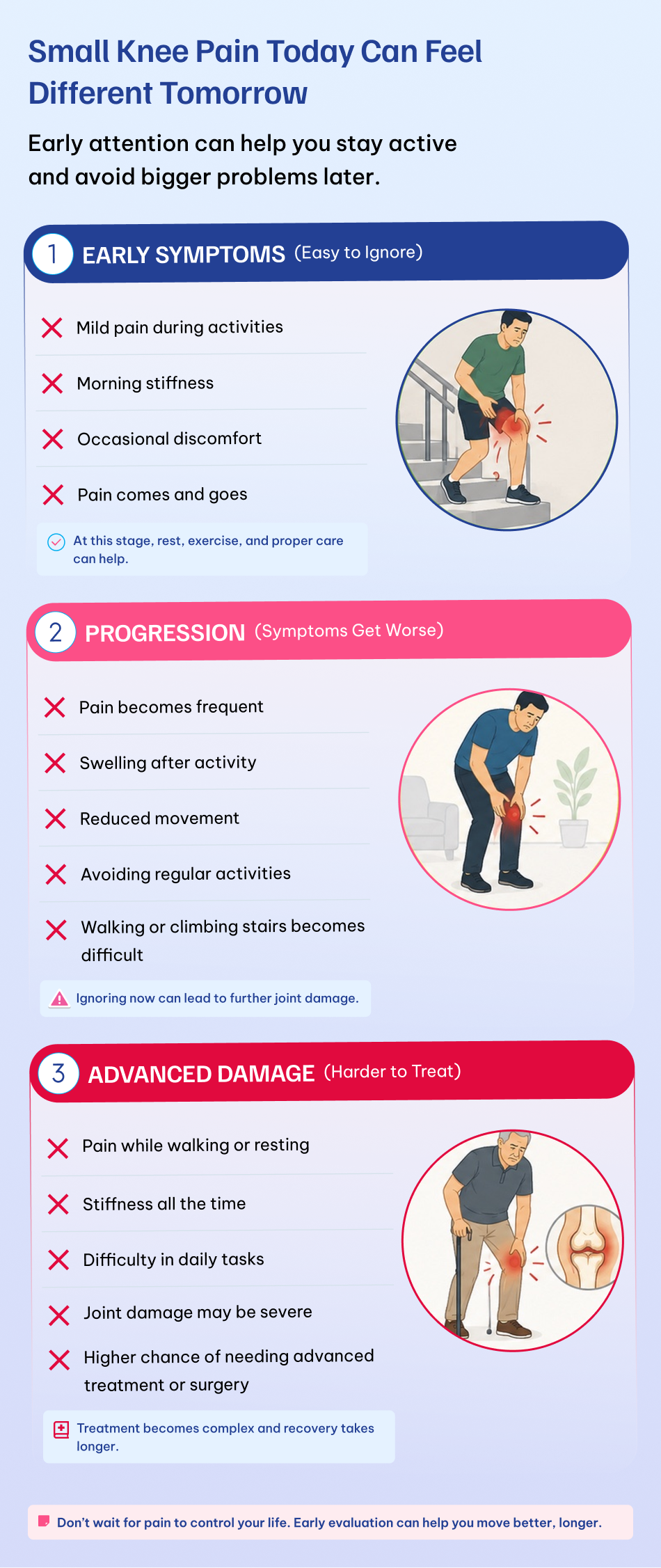
The timeline below shows how symptoms that begin as occasional discomfort can gradually affect movement and everyday life when left unaddressed.
What Happens During Your First Visit to an Orthopedic Doctor?
For many people, the hardest part is booking the first appointment. Questions like “Will I need surgery?”, “Will tests be painful?” or “Will this become serious?” are common. But in most cases, a first orthopedic consultation is designed to understand your symptoms first.
Step 01. Medical History
The consultation often begins with a conversation before any examination. These questions help the doctor understand the bigger picture and not just the painful joint.
Some common questions may include:
- When did the pain start?
- Is the pain constant, or does it come and go?
- What activities make it worse or better?
- Have you had previous injuries, treatment, scans, or medications?
These answers often help narrow down possible causes before moving to tests or treatment discussions.
Step 02. Physical Examination
A physical examination simply means understanding how your joint behaves in real movement.
Your orthopedic doctor may check:
- Range of movement
- Swelling or tenderness
- Walking pattern or posture
- Joint strength and flexibility
This is usually a hands-on assessment and helps identify whether the concern may be related to the joint, surrounding muscles, balance, or movement habits.
Step 03. Imaging and Tests
Not every patient needs imaging, but when required, tests may help confirm what the physical examination suggests.
Depending on symptoms, your doctor may recommend:
- X-ray
- Imaging studies
- Joint evaluation tests
A practical thing to consider while choosing a hospital is whether imaging and diagnostics are available in the same facility. Having X-ray and evaluation services under one roof can make the process smoother and reduce the need to travel between multiple centers.
Step 04. Understanding Treatment Options
One of the biggest misconceptions is that visiting an orthopedic doctor automatically means surgery. In reality, treatment is usually discussed based on your symptoms, lifestyle, diagnosis, and goals.
Depending on the condition, recommendations may include:
- Activity and lifestyle changes
- Physiotherapy and rehabilitation
- Medication-based management
- Joint-preservation approaches
- Knee or hip replacement when appropriate
- Robotic-assisted orthopedic procedures
Your first orthopedic visit is usually less about making immediate decisions and more about understanding what your joint is trying to tell you. Asking questions early often helps patients make informed choices with greater confidence.
Treatment Options for Joint Pain
For many patients, joint pain management starts with simpler, more conservative options. Surgery is only one of several treatment approaches and is usually considered after understanding symptoms, severity, lifestyle, movement goals, and response to earlier treatments.
Lifestyle and Activity Changes
Small everyday changes can sometimes reduce unnecessary stress on joints and improve long-term comfort.
Common recommendations may include:
- Maintaining a healthy body weight to reduce pressure on joints, especially knees and hips
- Choosing low-impact activities such as walking or cycling instead of repetitive high-impact movements
- Improving posture and sitting habits
- Avoiding prolonged sitting and taking movement breaks
- Using supportive footwear when needed
- Adjusting daily routines to reduce repetitive joint strain
These changes may seem simple but can support better joint function over time.
Medications
Medication is not a one-size-fits-all solution and is not recommended without proper medical evaluation. If symptom management is needed, any medication approach is typically decided by the doctor after assessing the patient’s condition, medical history, and overall treatment needs.
Depending on the clinical assessment, supportive measures may sometimes be considered to help manage discomfort and maintain daily movement for a period of time.
Consider booking a consultation with Dr Jay Patel, an orthopaedic surgeon in Lunavada who can help you to evaluate symptoms and recommend the most appropriate next steps based on individual needs.
Physiotherapy
Physiotherapy focuses on improving joint mobility—not simply reducing pain.
Depending on the condition, physiotherapy may help:
- Strengthen muscles around the joint
- Improve flexibility and movement
- Support balance and walking patterns
- Reduce stiffness
- Improve confidence during everyday activities
For many patients, structured physiotherapy becomes an important part of avoiding unnecessary progression.
Joint Preservation Treatments
When symptoms continue despite basic treatment, doctors may recommend approaches designed to support the joint before considering replacement procedures.
These may include:
- Guided rehabilitation programs
- Movement correction strategies
- Activity modification
- Advanced evaluation and treatment planning
- Joint-focused interventions depending on the diagnosis
The goal at this stage is often to maintain natural joint function for as long as possible.
Surgery is generally considered when pain begins affecting everyday life and conservative treatments no longer provide the expected improvement.
Depending on the condition, treatment discussions may include knee replacement procedures, hip replacement procedures, or advanced orthopedic approaches, including robotic-assisted procedures for treatment planning and precision support.
Choosing surgery does not mean a condition has become “too late.” It means the treatment approach is selected based on what gives the patient the best chance of improving movement and quality of life.
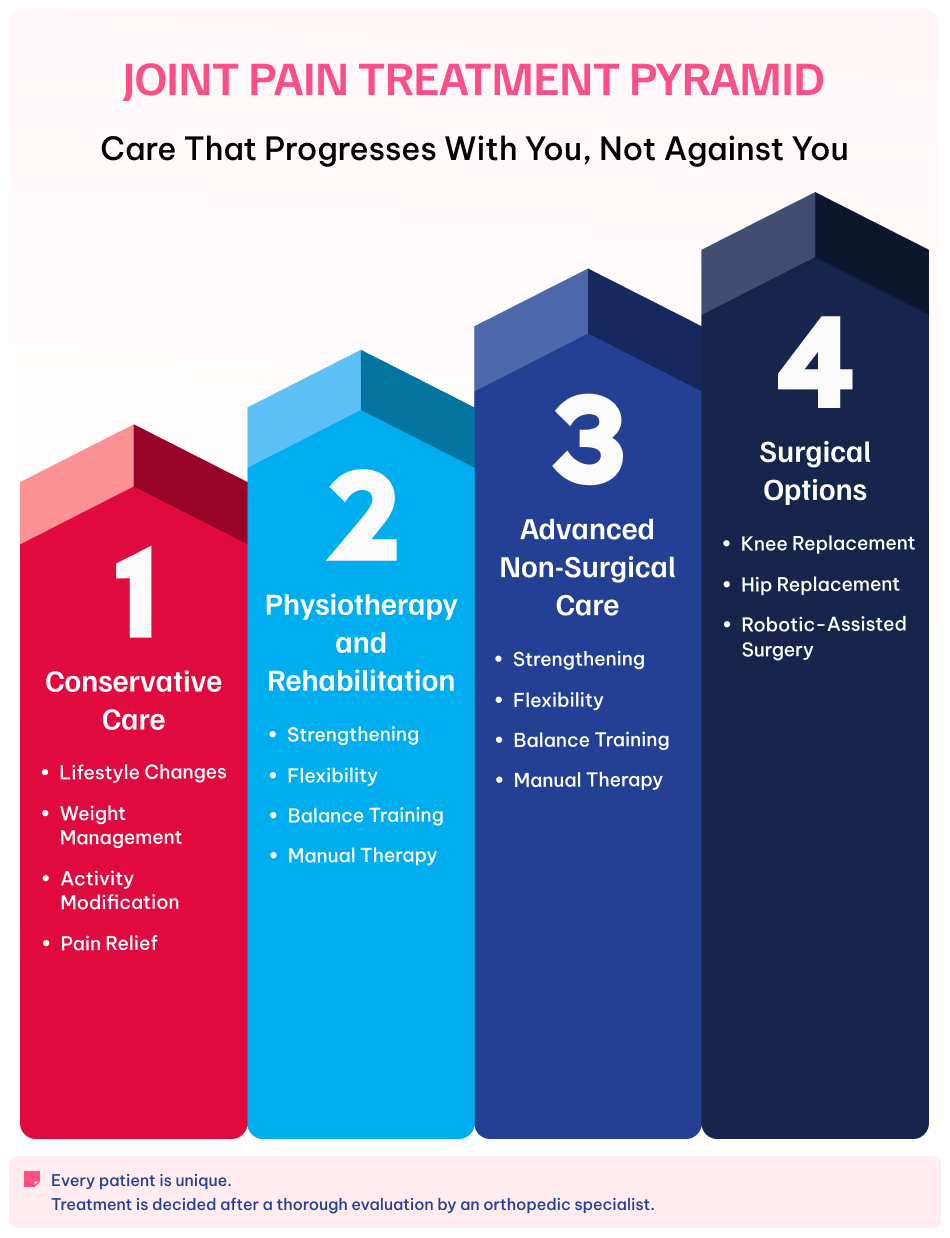
Treatment usually moves step by step. The visual below shows how joint care often progresses, from simpler approaches to advanced treatment options only when needed.
If your symptoms have reached the stage where surgery is being discussed, consulting Dr. Jay Patel, an orthopedic surgeon in Lunawada, can help you understand all available options and make informed decisions based on your condition and lifestyle.

Joint Pain Should Not Decide How You Live
Conclusion
Joint pain often becomes easy to ignore until it starts changing how you move, work, or live. Paying attention to persistent symptoms and seeking the right guidance early can help you understand your options and make informed decisions for your joint health.
Joint pain does not always mean something serious, but understanding when to seek medical attention can help preserve movement, comfort, and long-term quality of life.
If you or your loved ones are experiencing any joint pain, it’s time to visit Bapashri Orthopedic & Joint Replacement Hospital today to get a consultation that provides clarity.
FAQs
Is joint pain serious?
Not always. Joint pain can occur after activity, following a minor strain, or due to temporary inflammation, and may improve with rest. However, pain that lasts for weeks, keeps returning, causes swelling, limits movement, affects sleep, or changes daily activities should not be ignored. Persistent symptoms may benefit from evaluation by an orthopedic doctor.
Should I see an orthopedic doctor or physician first?
If your symptoms are mainly related to joints, bones, movement, stiffness, recurring swelling, or difficulty walking, seeing an orthopedic doctor can help you get a focused evaluation earlier. A physician may be helpful when symptoms are broader or associated with general health concerns. If joint pain is persistent or affecting mobility, orthopedic consultation may be considered.
Can knee pain go away without treatment?
Some types of knee pain caused by temporary strain, overuse, or mild activity-related discomfort may improve with rest and activity modification. However, pain that continues for more than a few weeks, returns frequently, worsens over time, or limits movement may require evaluation. Delaying assessment may sometimes reduce opportunities for simpler treatment options.
How long should I wait before seeing an orthopedic doctor?
There is no single timeline for everyone, but if joint pain continues beyond 2–3 weeks, keeps returning, affects sleep, limits movement, or makes everyday activities difficult, it may be time to consult an orthopedic doctor. Early evaluation does not always mean treatment—it helps patients understand the cause sooner.
Do all joint problems require surgery?
No. Most patients with joint pain do not require surgery. Treatment may begin with lifestyle changes, activity modification, symptom management, physiotherapy, and joint-preservation approaches. Surgery is usually considered only when symptoms continue affecting quality of life and other treatment options are no longer providing the expected improvement.
At what age is joint pain common?
Joint pain can happen at almost any age depending on activity levels, injuries, lifestyle, or underlying conditions. While age-related joint changes become more common after midlife, younger adults may also experience joint discomfort due to repetitive movement, sports injuries, prolonged sitting, or prior injuries. Joint pain should be evaluated based on symptoms—not age alone.