


 Knee Replacement Surgery Cost
 Knee Pain
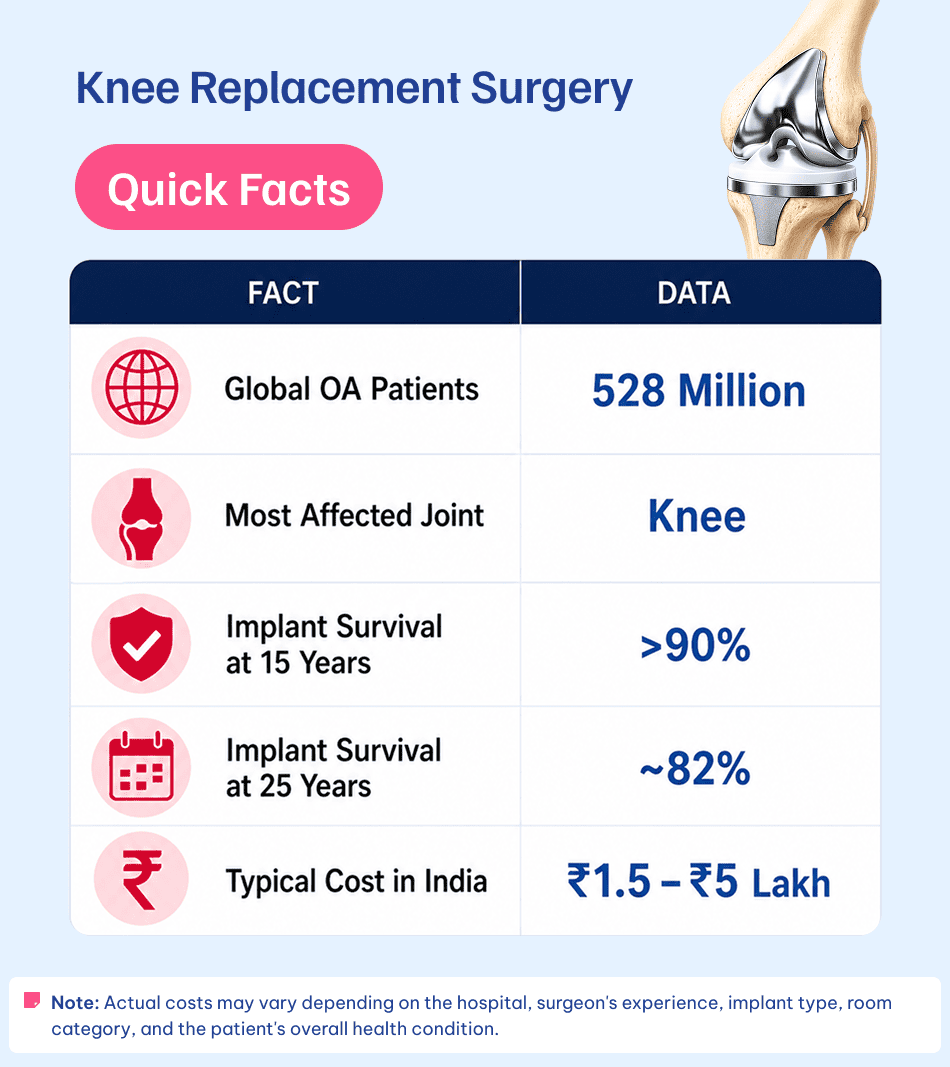
When chronic knee pain stops you from doing everyday things like walking, climbing stairs, or chasing after your grandkids, knee replacement surgery can feel like a lifesaver. According to the World Health Organization (WHO), approximately 528 million people worldwide live with osteoarthritis, and the knee is the most commonly affected joint.
However, before deciding on surgery, most patients have one important question: How much does knee replacement surgery cost?
At Bapashri Hospital, Dr. Jay Patel and his team regularly meet patients concerned about their knee pain and the financial aspects of treatment. Understanding the costs involved is an important part of planning for surgery and making informed healthcare decisions.
Trying to figure out medical expenses can feel overwhelming. Hospital charges, surgeon fees, implant costs, rehabilitation expenses, and insurance coverage can make it difficult to understand the total investment required.
This guide is here to simplify the process. We will break down the knee replacement surgery cost in simple, easy-to-understand language so you can plan your budget, avoid unexpected expenses, and focus on what matters most-getting back on your feet and living an active, pain-free life.
Inpatient vs. Outpatient Surgery Costs
The type of hospital stay plays an important role in determining the final cost of knee replacement surgery.
Inpatient Surgery
Inpatient knee replacement involves staying in the hospital for a few days after surgery. These procedures cost more because they include room charges, nursing care, and extended monitoring.
Outpatient Surgery
Outpatient knee replacement allows selected patients to return home within 24 hours. Since hospital stays are shorter, outpatient procedures are often more affordable.
The right option depends on the patient’s age, health, and recovery needs. In addition to the knee replacement surgery cost, patients should consider the expertise of the surgeon, hospital quality, and rehabilitation support when planning their surgery.
The Average Cost of Knee Replacement Surgery
Knee replacement surgery can be life-changing for people struggling with severe knee pain caused by arthritis, injury, or age-related wear and tear.
The maximum selling price of many knee implants in India is regulated by the National Pharmaceutical Pricing Authority (NPPA), which sets price ceilings for certain implant categories. As a result, manufacturers, distributors, and hospitals generally cannot charge above the prescribed ceiling price for regulated implants.
The average cost of knee replacement surgery in India typically ranges from ₹1.5 lakh to ₹5 lakh. However, the final cost can vary significantly based on factors such as the type of procedure, implant selection, hospital facilities, surgeon expertise, and postoperative rehabilitation requirements.
While implant prices may be regulated, private hospitals play a key role in determining the overall cost of the treatment package.
To help you understand the expenses involved, the tables below provide a detailed breakdown of the costs associated with knee replacement surgery in Gujarat, including surgeon fees, hospital charges, implants, anesthesia, and post-operative care.
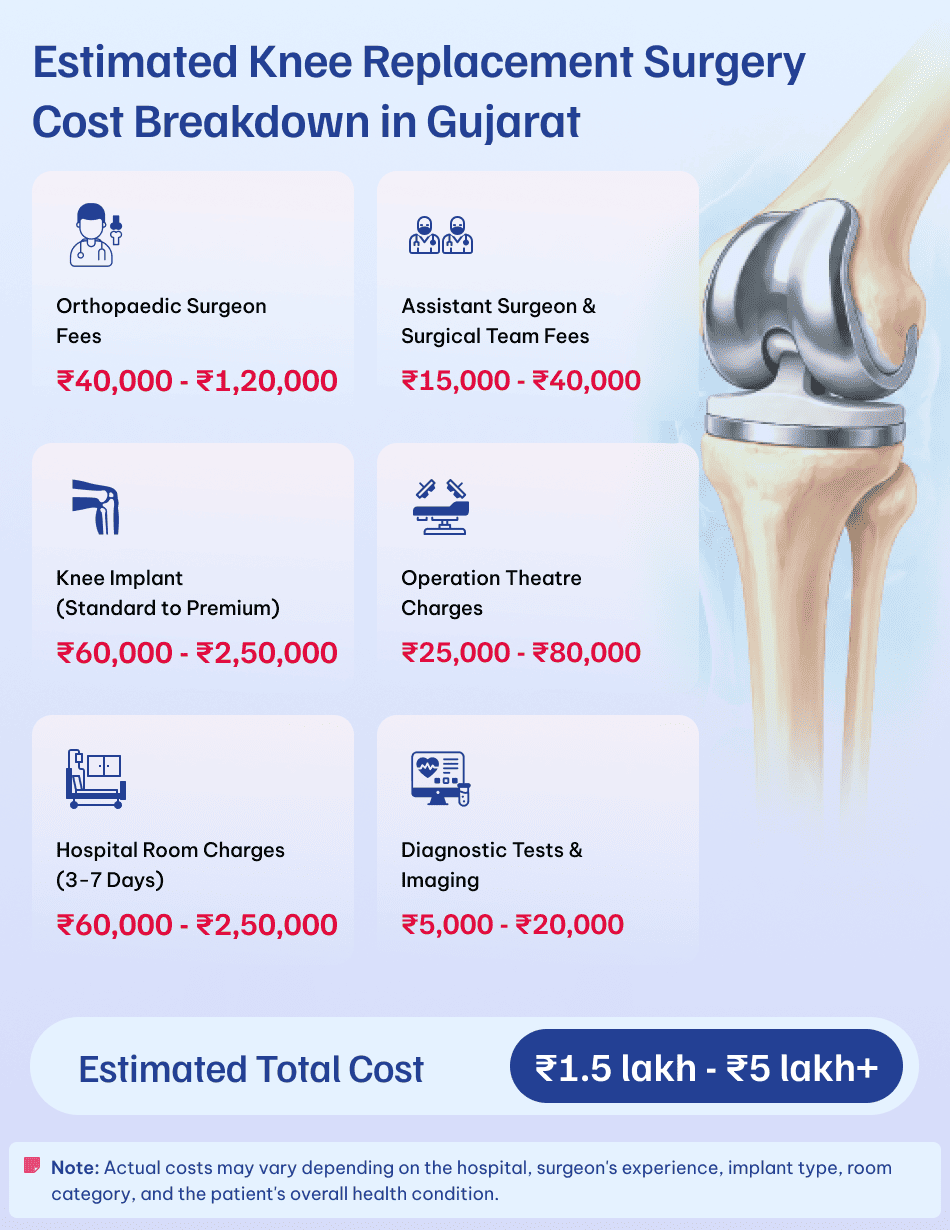
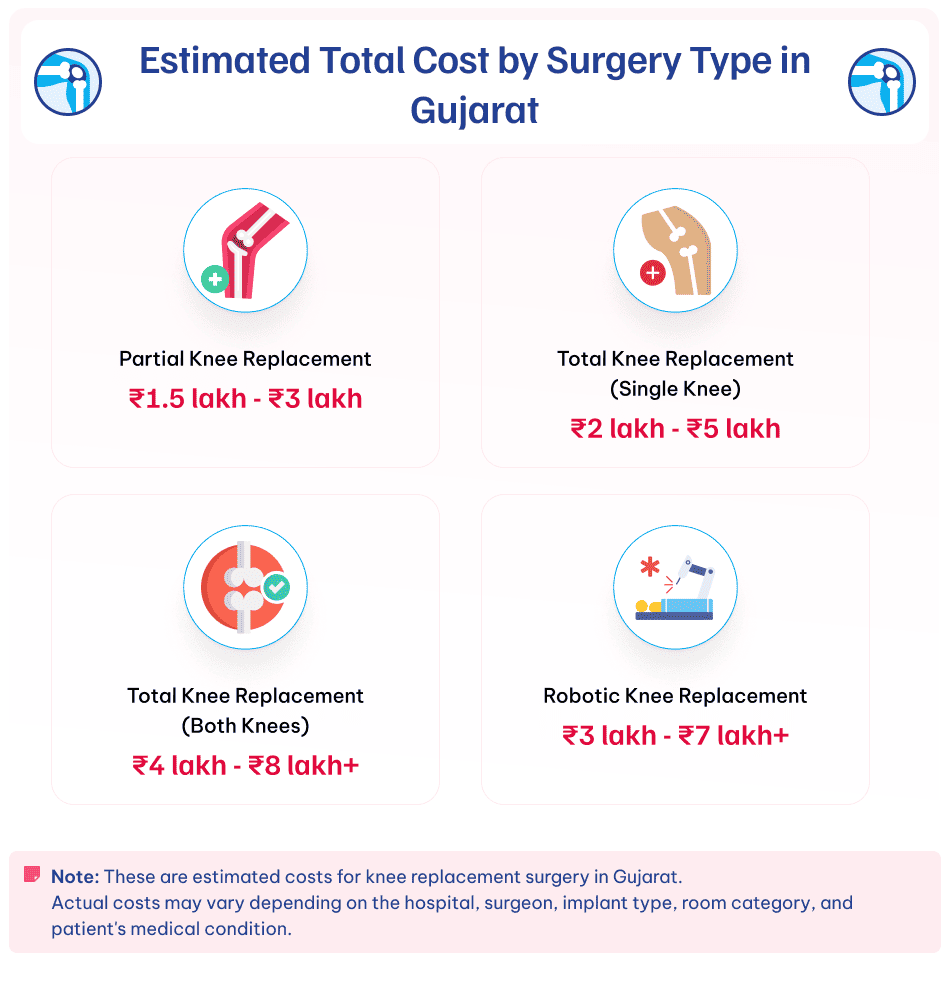
Knee Replacement Surgery Facts
Knee replacement surgery helps relieve chronic knee pain, restore mobility, and improve quality of life when non-surgical treatments are no longer effective. Advances in surgical techniques and implant technology have made the procedure safer and more reliable than ever, helping patients return to their daily activities with greater comfort and confidence. The infographic below highlights some important facts about knee replacement surgery and its long-term outcomes.
Key Factors That Influence the Final Bill
The knee replacement surgery cost varies significantly between patients. Several factors influence the final bill, so it is essential to understand where expenses come from before planning treatment.
Hospital Fees & Location
Hospital charges are among the biggest contributors to the overall cost of knee replacement surgery. Premium hospitals, multi-specialty centers, and facilities in metro cities charge more due to advanced technology, infrastructure, and specialized care. Room category, hospital stay duration, and post-operative services also affect the final amount.
Surgeon’s Fees & Experience
The surgeon’s experience and reputation also influence the cost of knee replacement surgery. Highly experienced orthopaedic surgeons may charge higher fees, but their expertise often leads to better surgical outcomes, lower complication rates, and smoother recovery.
It is important to remember that the success of knee replacement surgery depends on more than just the implant itself. Accurate diagnosis, meticulous surgical planning, precise implant positioning, comprehensive rehabilitation, and long-term follow-up care all play critical roles in achieving the best possible outcome. Choosing an experienced orthopaedic surgeon can help optimize these factors and improve overall recovery results.
Pre-Surgery Preparation
Before surgery, Dr. Jay Patel typically conducts multiple consultations, diagnostic tests, and medical evaluations to assess a patient’s overall health and surgical readiness. Costs for X-rays, MRIs, blood tests, cardiac assessments, and other pre-operative investigations contribute to the overall treatment expense.
Many patients focus primarily on the surgery itself when estimating the knee replacement surgery cost. However, several additional expenses can increase the final bill and should be considered when planning and budgeting for treatment.
Hidden or Unexpected Costs
While most patients focus on the surgery and implant costs, several additional expenses can significantly increase the overall knee replacement surgery cost. As shown in the chart below, hidden costs such as anesthesia fees, operating room charges, post-operative medical equipment, prescription medications, physiotherapy, and follow-up consultations can add anywhere from ₹47,000 to ₹2,00,000 or more to the final bill.
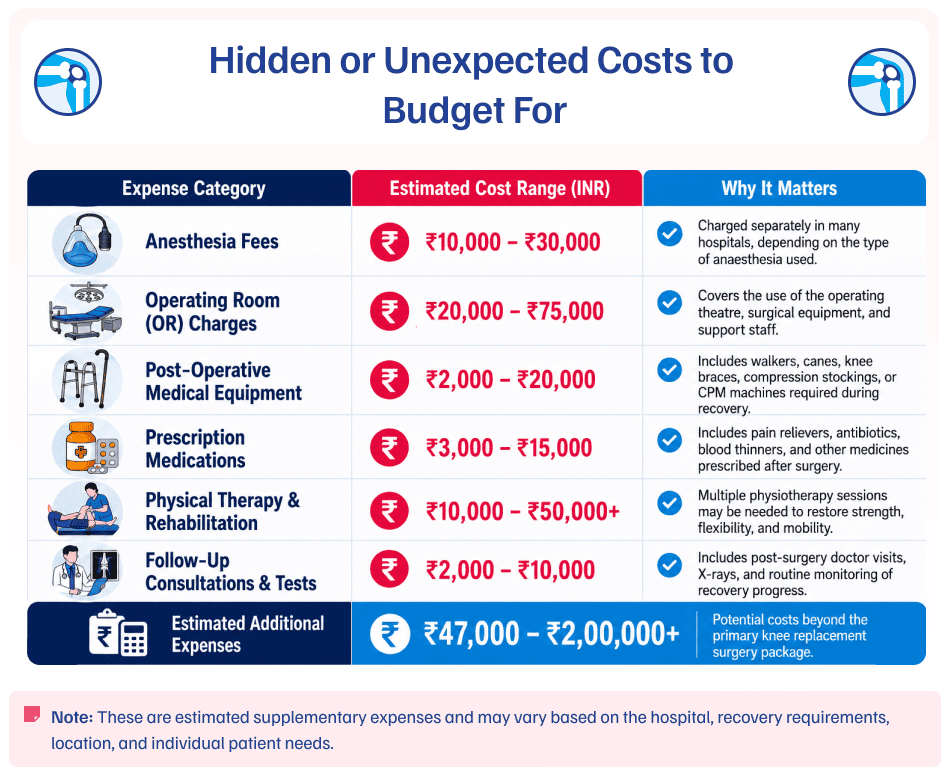
Among these, operating room charges and rehabilitation expenses are often the largest contributors. Recovery-related costs, including physiotherapy sessions, supportive equipment such as walkers or knee braces, and ongoing medications, are essential for achieving optimal surgical outcomes but are often overlooked in financial planning.
By understanding and budgeting for these supplementary expenses in advance, patients can avoid unexpected financial stress and gain a more accurate estimate of the true cost of knee replacement surgery.
Insurance, Medicare, and Financial Coverage
Understanding insurance coverage is important when planning knee replacement surgery. Insurance can reduce out-of-pocket expenses, but coverage varies by policy, provider, and individual circumstances.
What Does Health Insurance Typically Cover?
Many health insurance providers in India cover medically necessary knee replacement surgery, subject to policy terms, waiting periods, and exclusions. Coverage often includes hospitalization, surgeon fees, knee implants, and related treatment expenses. However, coverage limits, waiting periods, exclusions, co-payments, and network hospital requirements may affect out-of-pocket costs. Patients considering treatment at Bapashri Hospital can contact the office of Dr. Jay Patel, Orthopaedic Surgeon in Lunavada, to verify accepted insurance plans and understand their coverage benefits
Government Health Schemes and Insurance: Out-of-Pocket Expectations
In India, private health insurance and government healthcare schemes can cover a significant portion of the knee replacement surgery cost. However, patients may still have out-of-pocket expenses, such as deductibles, co-payments, non-covered implants, medications, or rehabilitation services.
Reviewing your policy and confirming coverage details with your insurer and Bapashri Hospital can help you avoid unexpected costs.
Understanding Co-Payments and Other Out-of-Pocket Expenses
Even with health insurance coverage, patients should understand the policy terms that affect their financial responsibility.
- Co-pay: A fixed percentage or amount that the patient must pay toward the treatment cost, with the insurer covering the remaining eligible expenses.
- Sub-limits: Caps on coverage for specific expenses, such as room rent, implants, or certain procedures.
- Non-payable Expenses: Costs that are not covered by the insurance policy and must be paid by the patient.
- Policy Exclusions: Treatments, services, or conditions that are not covered under the insurance plan.
Reviewing these details at Bapashri Hospital before surgery can help patients estimate their out-of-pocket costs and avoid unexpected financial burdens.
Questions to Ask Your Doctor and Insurance Provider
Before scheduling knee replacement surgery, it is important to understand both the medical and financial aspects. Asking the right questions helps you avoid unexpected expenses, understand your recovery plan, and make informed decisions about your treatment.
Use the following checklist when speaking with your knee replacement surgeon and insurance provider:
Questions for Your Doctor
- Am I eligible for knee replacement surgery?
- What type of knee replacement procedure do you recommend?
- What is the estimated total cost of the surgery? Which implant will be used, and does it affect the cost?
- How long will I stay in the hospital?
- What rehabilitation or physical therapy will I need after surgery?
- What additional costs should I expect during recovery?
- What are the potential risks or complications?
Questions for Your Insurance Provider
- Is knee replacement surgery covered under my plan?
- Do I need pre-authorization before the procedure?
- What portion of the surgery cost will be covered?
- What are my deductible, co-pay, and coinsurance responsibilities?
- Are the hospital and surgeon included in my provider network?
- Are physical therapy and rehabilitation services covered?
- Are prescription medications covered after surgery?
- What is my expected out-of-pocket cost?
Bringing this checklist to your appointment helps you ensure you have a complete picture of costs, coverage, and recovery before moving forward with knee replacement surgery.
Conclusion
Knee replacement surgery is an investment in a more active, comfortable, and pain-free life. Understanding the factors that influence overall costs, including hospital charges, implants, rehabilitation, and insurance coverage, can help you plan more effectively and avoid unexpected expenses. Before surgery, review your insurance benefits and consider the expenses involved in recovery. With proper planning and expert care at Bapashri Hospital, you can focus on a smooth recovery and getting back to the activities you enjoy.
FAQ
What is the average cost of knee replacement surgery in India?
The average cost of knee replacement surgery in India ranges from ₹2 lakh to ₹5 lakh for a single knee. The exact cost depends on factors such as the hospital, the surgeon’s expertise, the implant type, and the location. Double knee replacement and robotic-assisted surgery generally cost more.
Does health insurance cover knee replacement surgery?
Most health insurance policies in India cover knee replacement surgery when it is medically necessary. However, coverage varies by policy, so it is important to check details such as co-payments, waiting periods, coverage limits, and exclusions with your insurer before surgery.
What hidden costs follow knee replacement surgery?
In addition to the surgery itself, patients may need to budget for prescription medications, physical therapy sessions, follow-up appointments, and recovery aids such as walkers or canes.
Is knee replacement 100% successful?
No, knee replacement surgery cannot guarantee 100% success. However, it is one of the most successful orthopedic procedures, with most patients experiencing significant pain relief, improved mobility, and a better quality of life.
Results depend on factors such as overall health, the severity of joint damage, the surgeon’s expertise, and commitment to rehabilitation. Modern knee implants are designed for long-term durability. According to the American Academy of Orthopedic Surgeons (AAOS), more than 90% of knee replacements remain functional after 15 years, and approximately 82% remain functional after 25 years.
How long does bilateral knee replacement surgery take?
Bilateral knee replacement (both knees replaced during the same surgery) typically takes about 2 to 4 hours, depending on case complexity and the surgical technique used. After surgery, patients usually stay in the hospital for a few days and begin physiotherapy soon afterward. Full recovery may take several months, but most patients can gradually return to their daily activities as strength and mobility improve.